lunedì 3 febbraio 2014

Victorian House Museum

Victorian House Museum
Victorian House Museum - Holmes County Historical Society

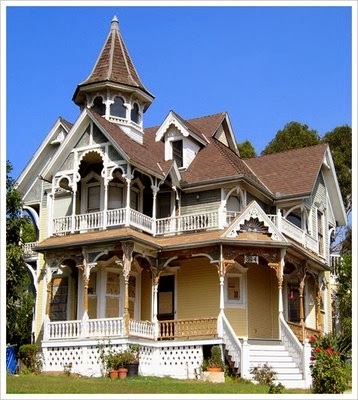
In the heart of Ohio Amish country, this beautiful Victorian Mansion is the home of the Holmes County Historical Society. 
With 28 beautifully appointed rooms waiting for your discovery, this classic example of Queen Anne architecture is full of antiques furnished by local citizens. 

From the breath taking facade to the elegant white oak staircase that greets you as you enter, you'll be amazed at the details you find in this gem of Millersburg. You will step back in time as you tour all four floors of our mansion, from the exquisite ballroom on the fourth floor to the sauna and steam room in our basement. 

Our tours are self-guided, so take as much time as you want. Beautiful parquet floors are a must see! There is something here for everyone, young and old. Tours are self guided March weekends only, April - Oct. Tues. - Sunday- $8.00 for adults,senior citizen $7.00, students $3.00 and children under 12 FREE! Bus tours are welcome and can be arranged for special times. Why not spend the day in historic Millersburg to complete your tour?
Address
Victorian House Museum 484 Wooster Rd.
Millersburg, Ohio 44654
Phone Number(s)
Toll-Free: (888) 201-0022
Local Number: (330) 674-0022

E-mail Address(es)
info@holmeshistory.com

Hours
Sunday: 1:00 PM - 4:00 PM
Tuesday: 1:00 PM - 4:00 PM
Wednesday: 1:00 PM - 4:00 PM
Thursday: 1:00 PM - 4:00 PM
Friday: 1:00 PM - 4:00 PM
Saturday: 1:00 PM - 4:00 PM

sabato 1 febbraio 2014

Victorian Easter Cards

Find the largest selection of victorian easter card.

Everyone loves to receive a special message in the mail from loved ones, and our collection of old-fashioned cards, postcards and stickers will help you express your warmest Easter greetings with a distinctive, traditional flair.

Easter Greeting Card


Easter Victorian Card


Easter Victorian Card

Easter traditions during the Victorian era

Easter Card
Many of our current Christmas and Easter traditions originated back in the Victorian era which covered the duration of Queen Victoria's reign over the UK from 1837 to 1901.
At that time England was emerging from its historic Puritanical bans on celebrations. The people at that time were filled with joy and hope as they embraced a new world of merry celebrations and traditions. Today many of these Victorian traditions are still popular and there is no sign that they will be abandoned.

The Easter Holiday

Easter is one of the major Christian festivals of the year in the UK. The participants enjoy its customs, folklore and traditional foods. It is an ancient holiday dating back to pagan times long before Christianity arrived in Britain. The first English historian, the Venerable Bede, wrote that Easter derived from the Anglo-Saxon goddess of the dawn and spring--Eostre.

Easter falls at the end of the winter and the end of Lent, which is a time of fasting during the Christian calendar. This is a joyful holiday marked by feasting, fun and celebration. The British national holidays for Easter come on the Friday before Easter Sunday and the Monday afterward. The schools are closed for two weeks and the children devour chocolate in large quantities.

Victorian Traditions

A large variety of Victorian traditions have survived the years. One favorite is Easter cards, which began in the late 18th century when a publisher added an Easter greeting to a drawing of a bunny on writing stationery. Sending the cards is a fun practice which is now growing in the US as well.

The Easter Lily became popular in symbolizing life after death, since the bulb grows, blooms, dies back and grows once again during the following year. Although tulips, daffodils and narcissus follow the same life cycle, the lily with its large size and white blossom is an excellent symbol of resurrection during the season.

Easter parades allow the participants in the processional to show off their spring finery after Easter Mass as they stroll through the streets following a priest or minister with a crucifix or a candle. The Easter bonnet became a favorite adornment for women and girls to show off as they walked. During Victorian times, a beau might give a pair of gloves to his sweetheart and if she wore them during the parade, she was announcing her acceptance of his marriage proposal.

The children were especially excited when they awoke on Easter morning to see what the Easter bunny had brought them for their Easter baskets. If they had been good throughout the year, they could expect a variety of chocolate eggs and bunnies, jelly beans and other sweet treats. Egg rolling contests and Easter egg hunts were/are a favorite pastime during this holiday.

In some areas, Morris dancers perform a folk dance which has roots dating back to the Middle Ages. The men dress in colorful costumes with hats and ribbons. They also wear bells around their ankles as they dance through the streets. Some carry sticks with inflated pigs' bladders tied on the end. When they dance up to young women, they smack them over the head with the bladder. This is supposed to bring them luck. One wonders just what kind of luck the lady might find afterward--or is it the young man who gets lucky?

Maundy Thursday

This is the Thursday before Easter, commonly remembered as the Last Supper, when Christ washed his disciples' feet as an act of humility. The word "Maundy" comes from the French word, "Mande," which means "command." The Ceremony of the Royal Maundy in Britain dates back to Edward I.

It is traditional for the British Queen to participate in the ceremony. She distributes Maundy Money in white and red purses to senior citizens which amounts to one man and woman for each year of her own age. This tradition dates back to at least the 17th century when the royal sovereign washed the feet of some poor people as a gesture of humility. The last royal monarch to participate in this version of the tradition was James II.

The British continue to enjoy their Victorian Easter traditions which they still practice today. As a side note, today the Easter Bunny is just as popular as Santa Claus.

Source

An Easter Celebration: Traditions and Customs From Around The World by Pamela Kennedy; Ideals Publications; 1991

venerdì 31 gennaio 2014

A Victorian cottage in the woods

Sandra Foster's magical one room cottage in The Catskills New York.

Sandra turned the former hunting cabin into a romantic cottage she had always dreamed of using salvaged architectural finds and doing the carpentry herself!

Victorian Cottage of Sandra Foster


Victorian Cottage in the Wood

Interior of Sanda Foster's Cottage

Buying a Victorian House

Victorian House
There are still many examples of Victorian houses in the United States, some of which are in great repair, while others are fixer-uppers. They were built in the nineteenth century, from about 1830. If you're interested in history and these lovely homes, you may be interested in buying your very own Victorian house.

1 Learn what makes a house a true Victorian house. Victorian houses usually have steeply pitched roofs, textured shingles, a partial front porch that usually extends along one or both sides walls and an asymmetrical design.

2 Contact a real estate agent that specializes in selling older homes, including Victorian homes. You may find there are quite a few Victorian Houses in your area.

3 Go to different websites to see listings of Victorian houses currently for sale throughout the country.

4 Be prepared to spend more money on this house than just the buying costs. Victorian houses usually require a great deal of upkeep, even if it's in good repair. Consider getting a Victorian house in poor repair and doing the repair work to get a deal on the price of the house.

5 Contact The Victorian Society in America for more information about the preservation of your house. You will want to be careful when doing repair and general upkeep that you're not permanently destroying history. Consider doing some research to make your Victorian house as authentic as possible (while still conforming to our comfort and sanitation levels).

Is Your House Victorian?

Victorian House

Is Your House Victorian?

Spanning the reign of Queen Victoria, the Victorian era (1837 to 1901) was a time of monumental change in many ways.

The Industrial Revolution meant that innovative techniques were being introduced, worldwide trade was opening up and the rapid economic growth then led to a big increase in building. And, with the creation of the railways and many new manufacturing processes, locally produced building materials - which were previously only used in the immediate area - soon became available all over the country.

Why Do Victorian Houses Look Like They Do?

People took a lot of pride in their properties and the more affluent classes saw their home as a big reflection of their status.

There was certainly an eclectic mix of styles throughout the Victorian era, with lots of adornment and trimmings, but it can also be said the Victorian age was very much a period of imitation and reproduction - many styles, which were previously popular, were revived.

giovedì 30 gennaio 2014

Women’s Victorian Shoes and Boots

Victorian Shoes
“Tavistock” Authentic Victorian Button Boots- Ivory or Black Victorian women were notable for their high black lace up boots.

 Often called granny boots, vintage western boots or witch’s boots they are popular with civil war and Victorian event re-enactors.

Steampunk costumers love to add gears, buckles, brass, and lot of attitude to traditional Victorian shoes.

Whether you need Victorian womens shoes, Victorian wedding boots, Steampunk boots, or hardy all purpose lace up boots you can find them here
© Victorian Style 2012 | Blogger Template by Enny Law - Ngetik Dot Com - Nulis